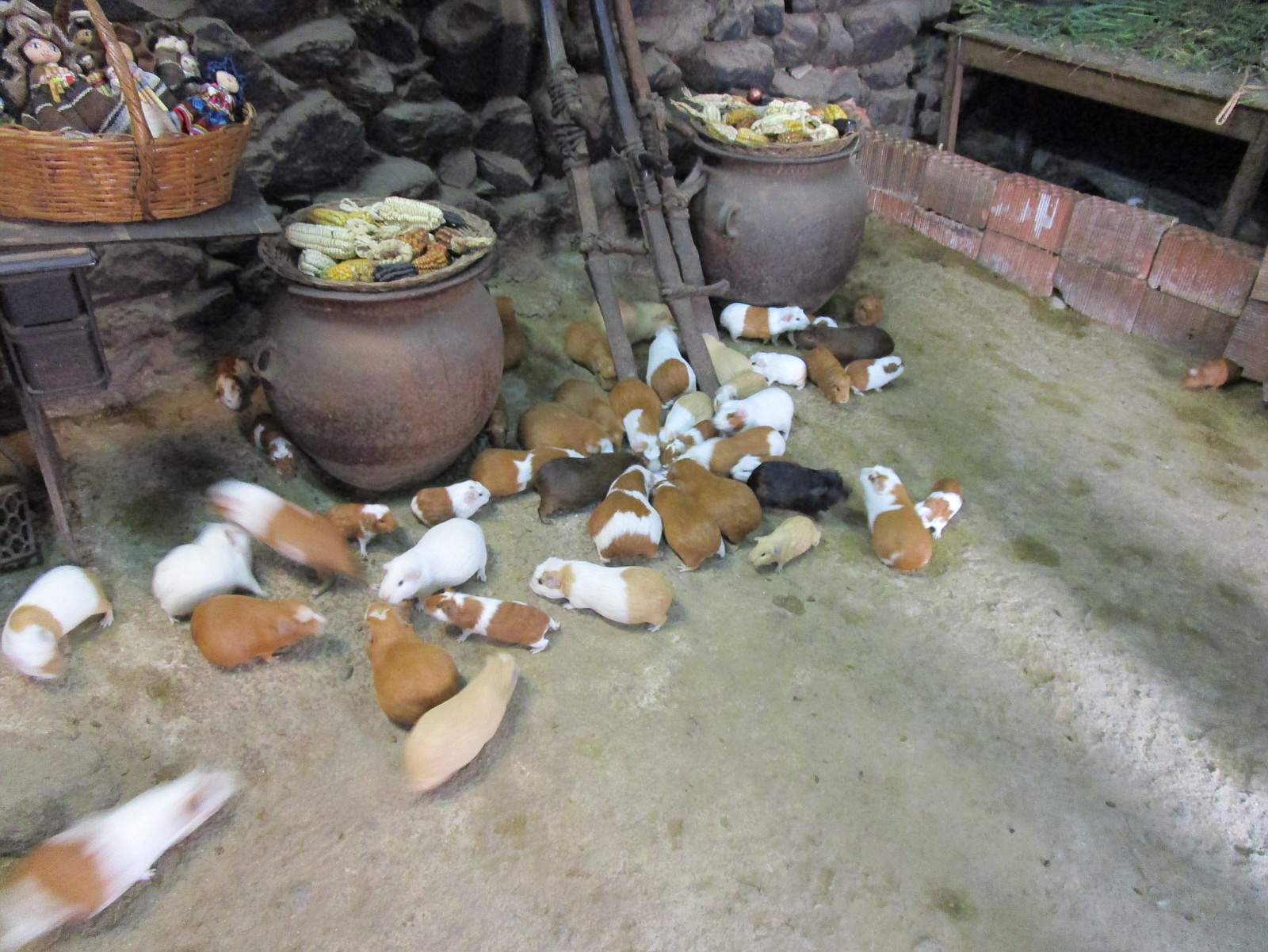
 We've been invited into the home of a local family, living in a traditional building like those used during Inca times. In fact, many of these are the same houses and buildings, passed down and often occupied by several generations of family members. These stone buildings are typically just a single room with a dirt floor and thatch roof. A fireplace, simple stove and beds occupy the corners of the room, along with food storage and other items. Skulls of ancestors sit above the fireplace and are sometimes taken out for celebrations and remembrances. The guinea pigs are not pets, they are an important and traditional food, common in Inca households, as well as the houses of the Inca descendants that live here today. The 'herd' of guinea pigs eat grasses, dried potatoes and other foods, and are cooked as needed -- but reproduce quickly. These houses have no running water or electricity. Water is found in channels running between the houses and the street, diverted from nearby streams. These channels were built by the Inca and still work today, and it's not uncommon to see residents come outside with a bucket to dip into the channel and bring indoors. It's a very different living style from what we are accustomed to.
|


